Keeping a heliostat field working
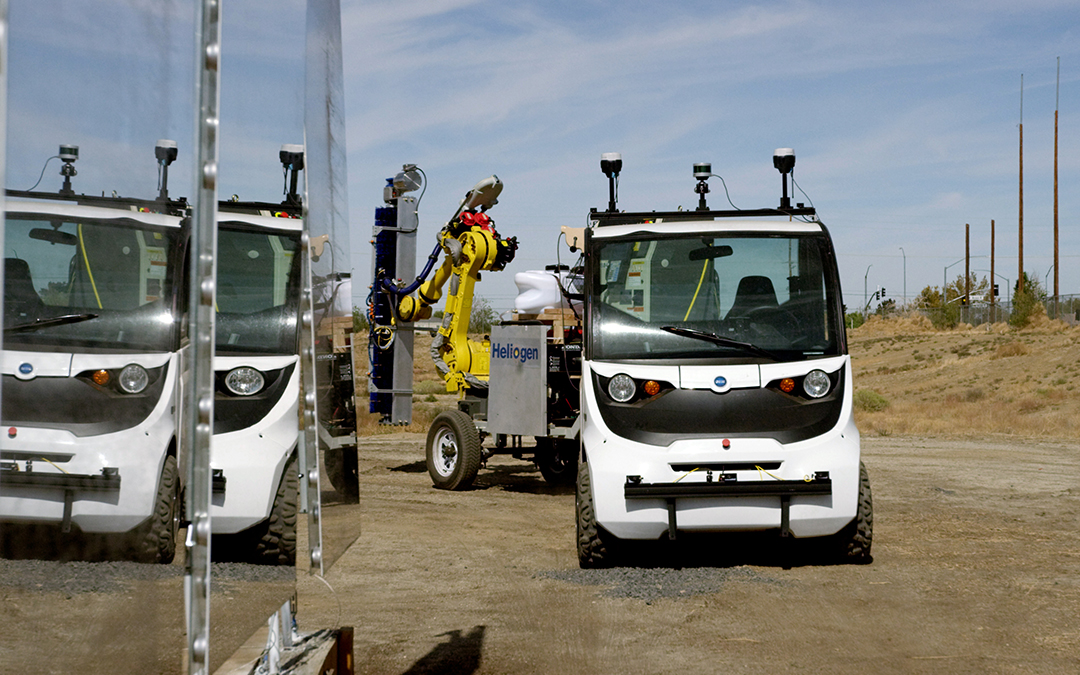
Heliostats are the mirrors that direct sunlight toward a solar receiver. Keeping them clean is part of keeping the plant working well. At Heliogen, I worked on a prototype vehicle that could take on that cleaning work autonomously.
The project was called ICARUS: Installation & Cleaning Autonomous Robot & Utility Solution. I worked on a small design team to build up the autonomous system from scratch and implement it in a real vehicle.
My contribution: perception and guidance
To guide a vehicle through a solar field, you need to turn measurements of its surroundings into something it can act on. My work combined perception inputs, including LIDAR, RTK GPS, and ultrasonic sensing, to guide the prototype during cleaning operations. At the end of the project, ICARUS could successfully navigate and clean deployed heliostats with no driver input.
A prototype in the field
Heliogen shared a field demonstration at its Lancaster, California facility in December 2021. The announcement gives a look at the prototype and the broader maintenance and installation work the company hoped to support with ICARUS. The original YouTube demonstration is no longer available. View the archived demonstration page ↗.
Related work
ICARUS brought sensing, software, and vehicle guidance into my energy work. In the solar thermal air receiver project, I worked on what happened at the other end of the heliostat field: turning the concentrated sunlight into high-temperature heat.