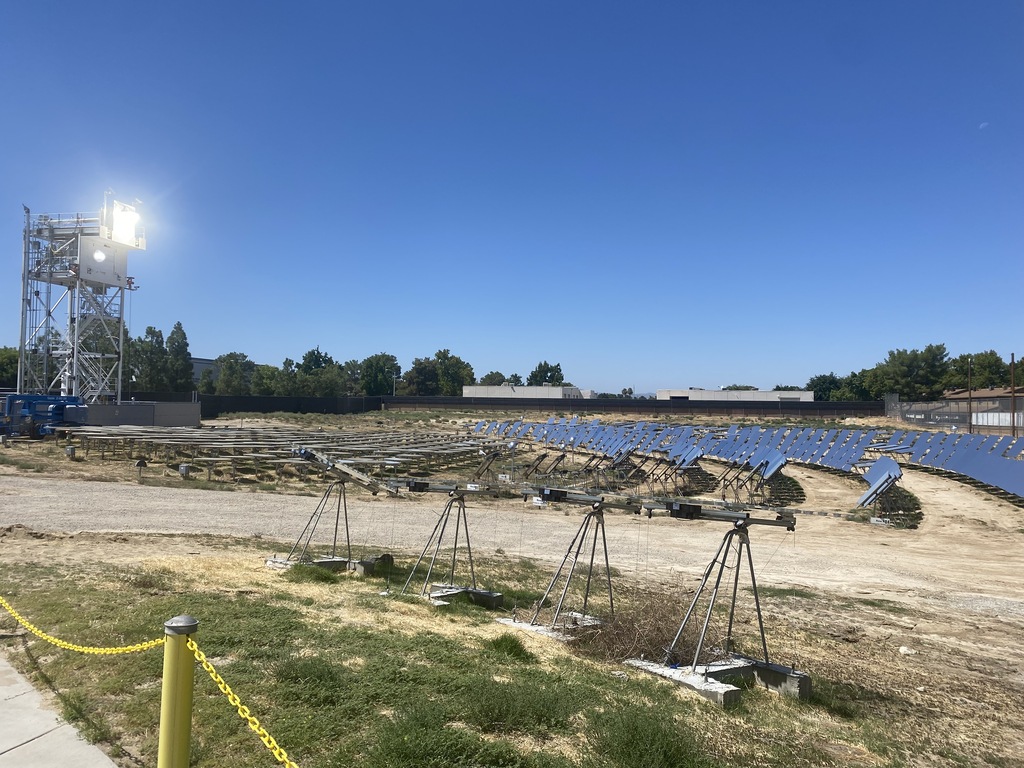
Turning concentrated sunlight into high-temperature air
As a research engineer at Heliogen, I worked with partners at GE Aerospace Research on a DOE-supported project to develop an additively manufactured silicon carbide receiver that used air as a working fluid. Our goal was to develop the highest-efficiency, highest-temperature solar-thermal receiver using air as a working fluid.
The work covered design, fabrication, laboratory validation, and testing in a solar field. For the formal project scope, see the 2022 DOE document for award DE-EE0009804.
My contribution
From 2021 to 2024, I led on-sun test engineering and optical simulation to inform receiver design. This included optical ray tracing, heat transfer modelling, hazard assessment, and large-scale test engineering to bring our prototypes safely up to 1100°C using only the sun. That meant working across teams, skill sets, and worksites to maximize confidence in the solar optical boundary condition and perform tests to meaningfully advance the design.
In parallel, I developed the technoeconomic models to help the team understand what combination of performance and cost would make the technology viable. Throughout the project life cycle, the team used this framework to inform system performance targets and advance the technology into a product.
On-sun testing
These photographs show the solar thermal test field and the experimental monitoring I conducted for this program. From the control room, we could monitor and command heliostats to supply up to 400 kW onto a test article.
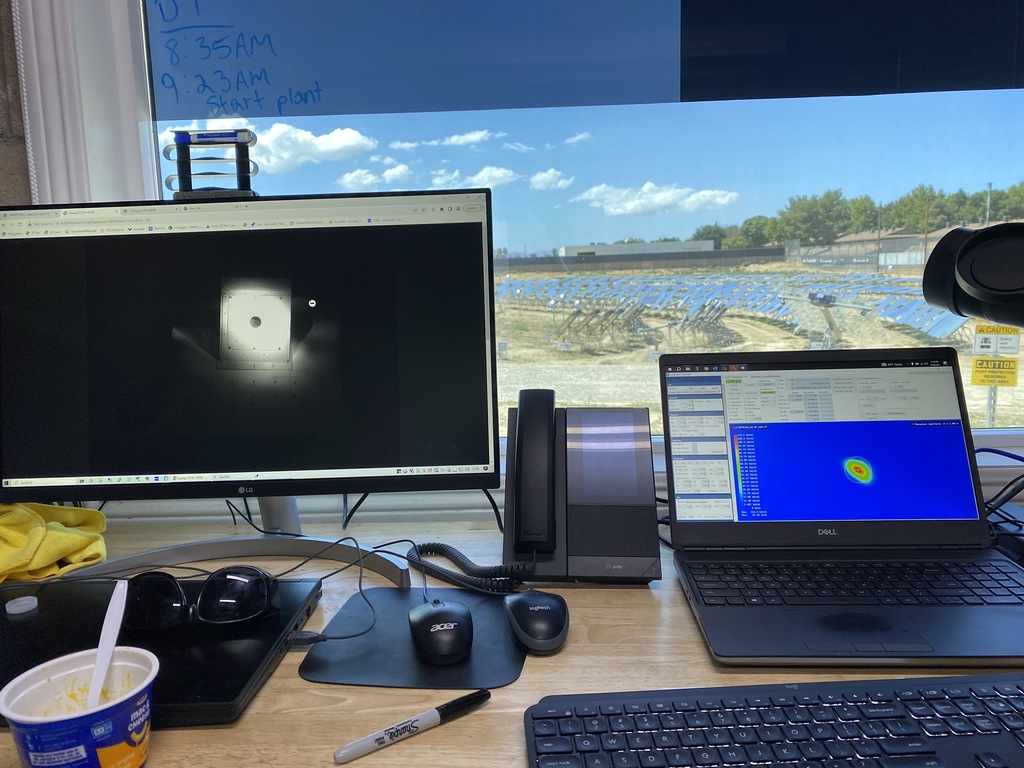
Figure 2. Monitoring on-sun testing, with the heliostat field visible beyond the workstation. Photo supplied by Hunter Whaples.
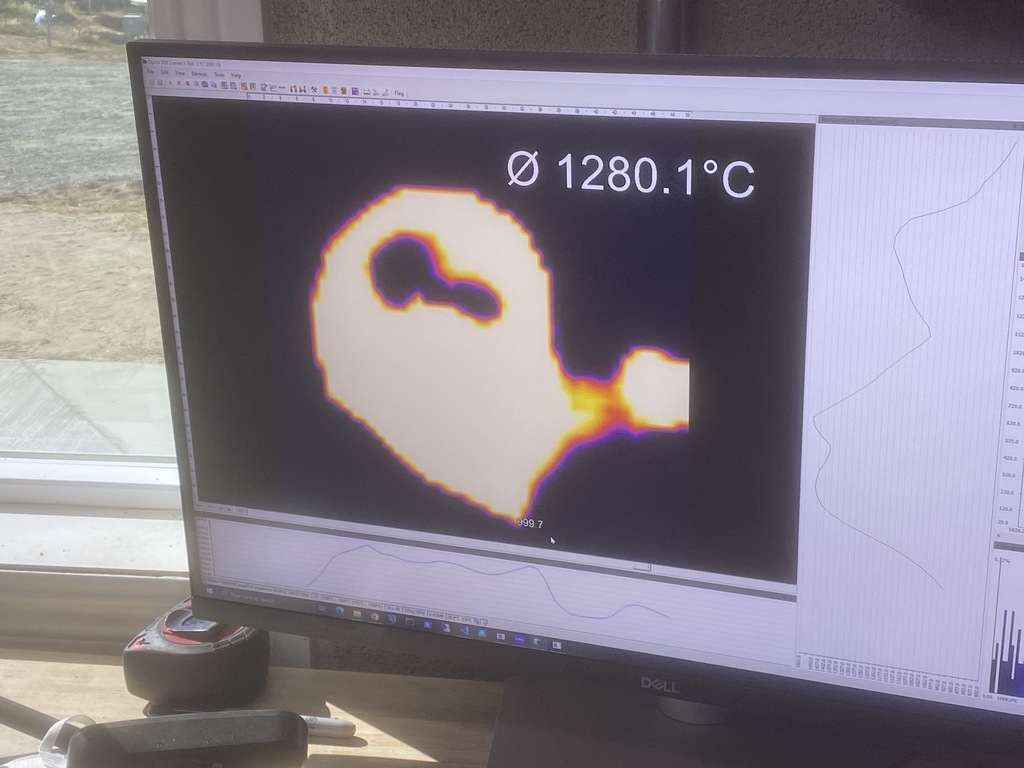
Figure 3. A thermal-camera view during receiver testing. The on-screen value is a thermal-camera reading. Photo supplied by Hunter Whaples.
From early development to later testing
The technology continued to develop after my time on the project. In July 2026, DOE reported testing at Sandia National Labs in which the HOTSSTAR receiver heated air to 850°C and reached surface temperatures near 1400°C.
Related work
My work at Heliogen also took me into autonomous guidance for heliostat cleaning. Keeping the mirrors working and making use of the heat they deliver turned out to involve quite different kinds of engineering.